
Oklahoma County Crime News Sources
Go to the official systems first, before any clip or archive. OCDC's Inmate Search shows who sits in county custody now, and the list shifts all day. For bookings, the Daily Blotter posts the newest report as a PDF. Neither is guaranteed complete. A name can drop off. An arrest can go unlisted. A photo may never appear at all.
Most gaps have ordinary explanations. A person might still be processing, get released before the next refresh, move to another facility, or sit in a city jail instead. The Blotter carries only the latest report, not an archive. Its page sets no fixed window of hours or days. Check the date stamped on the PDF, and ask the custodian directly if older material is missing.
A story can name the event and the agency that handled it. It cannot fix a hole in the official record. A missing photo online proves nothing, either, since OCDC's search landing page never promised to show one.
Oklahoma County News Outlet Patterns
Four local outlets cover Oklahoma County arrests, courts, sheriff activity, and detention on a rolling basis. Treat them as newsrooms, not booking feeds. The table below sorts their habits apart from the official sources. A photo in a story can come from a different chain than the record underneath it.
| Outlet | Coverage pattern | Photo practice | Source chain |
|---|---|---|---|
| Oklahoma City Free Press | Rolling stories on OCDC, county courts, sheriff activity, and arrests, strongest in Oklahoma City. | Selective. Some stories say an OCDC booking photo was provided. | OCDC, police statements, court and public records, interviews, or a mix. |
| KOCO 5 | Rolling coverage of Oklahoma City, Edmond, Midwest City, and the metro when newsworthy. | Varies. A story can use an agency image or report details without a photo. | Often OCDC, OCPD, a sheriff release, or a police social post. |
| KOKH/OKC FOX | Selected Oklahoma City and county crime stories, not a full log. | Some reviewed reports used an OCDC-supplied mugshot for a high-profile matter. | Police-report and arrest information are part of the documented pattern. |
| News 9 | Rolling local and regional reporting, including Oklahoma City, Midwest City, and Edmond. | Varies. Some stories say a mugshot is unavailable; others use an agency image. | Police, sheriff, court, or jail information commonly supplies the report. |
The Oklahoman has no confirmed current crime or mugshot section to point to here. Nondoc adds investigative depth and court-record context, but it is not a daily mugshot source either. Before repeating a story from either outlet as a current arrest fact, set it against the agency's own record.
Note: A single news image does not add up to a full county roster or a custody status.
How Oklahoma County Mugshots Reach News
No newsroom follows one fixed photo rule. Free Press stories clearly label booking photos supplied by OCDC in certain reporting. That is good sourcing, even though OCDC does not post every image for browsing. KOCO and News 9 show the other common pattern. They run the agency image when it exists, or say plainly that none is available. KOKH/OKC FOX has also used an OCDC-supplied photo in selected coverage. Always weigh the source and date printed with the story.
Oklahoma's public-record laws can open law-enforcement photographs in the situations covered by Attorney General Opinion 12-022. That access does not force an agency to publish every image online. Juvenile, sealed, protected, and court-restricted material stays off limits. A story photo, however vivid, is no stand-in for the custody record or the current court result.
Newsroom reports, agency images, booking entries, and charges all describe steps in a process. The court docket tells you where the case lands.
For city-level context, the Oklahoma City Busted Mugshots guide covers how city arrests can run through county detention and city records at once. Where any individual booking actually lands still needs confirming case by case.
From Oklahoma County Story to Record
Pull three things from the story first: the agency, the date, and the location. Then step into whichever system answers your next question. Oklahoma County keeps current custody, the newest booking report, court activity, and the eventual outcome in separate places. Work through them in order. That keeps a first-day report from being mistaken for a final result.
- Read the story for its stated agency and source. A photo does not establish current custody.
- Use OCDC's current-inmate search when the question is whether someone is presently in county custody.
- Use the current Daily Blotter only as a dated latest-report booking resource, not a fixed archive.
- Use the county-wide official booking and records guide when a record needs to be requested or custody may have moved between systems.
- Search OSCN by case, party, or county to follow docket activity and disposition.
OSCN and OCDC answer different questions. OCDC's legal-assistance materials explain arraignment, the first court appearance, and how to reach a public defender after detention. OSCN is where the docket unfolds. A disposition eventually appears there. That disposition is the court's resolution, not just the charge written at booking. Need a certified court record? Call the Oklahoma County Court Clerk, the local custodian.
Oklahoma County Latest-Report Limits
The Daily Blotter has real limits. The county posts one recent PDF at a time, and nothing on the page promises a lasting archive or a fixed window per report. A date printed inside a PDF describes that file alone. It says nothing about how long any arrest stays public. Treat each report as one day's snapshot, not a running log.
The inmate search works differently. It shows who is in custody right now, and results shift all day. A fresh booking may still be processing. Someone released or transferred can vanish from the list. None of the public police pages for Oklahoma City, Edmond, or Midwest City posts a daily arrest log. Their records desks stay the only route for incidents those departments handled.
News outlets fill some of the gap. Free Press, KOCO, KOKH, and News 9 pick and choose what to cover. A missing story proves nothing. It means no one wrote about it, not that no arrest happened that day.
Oklahoma County Secondary Listings
Beyond OCDC and the arresting agency, secondary publishers start appearing in searches. None is official. Listings can lag, vanish, or sit stale for weeks. A county filter helps, but it won't catch every city-jail hold, transfer, release, or correction. Every entry should be read as a dated lead to check against OCDC and OSCN.
Busted Newspaper's Oklahoma County section posts booking cards with physical descriptions, arresting agency, booked date, charges, and bond when listed. Updates arrive often and pages stack deep. The site makes no promise about how long Oklahoma County material stays up. RecentlyBooked Oklahoma takes a different angle, framing its listings as arrests from the past 30 days with search tools for county, name, date, and charge. Its counts and timestamps are point-in-time figures, not county statistics.
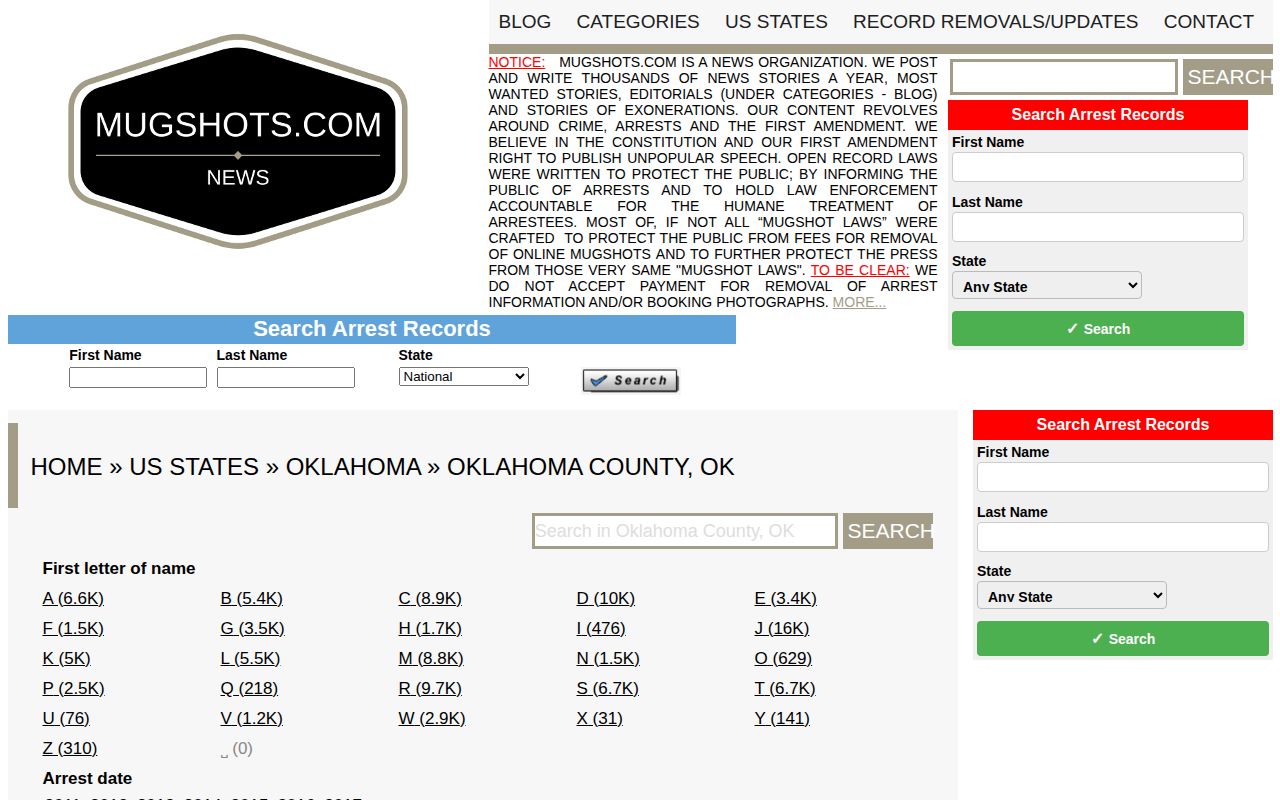
Mugshots.com's Oklahoma County archive reaches further back, sometimes pairing booking details with later ODOC information. Old material deserves extra care. A listed facility or sentence is a historical fact, not evidence of current custody, so pair any archive field with a date and a check through official channels. The same archived page shows why that follow-up matters.
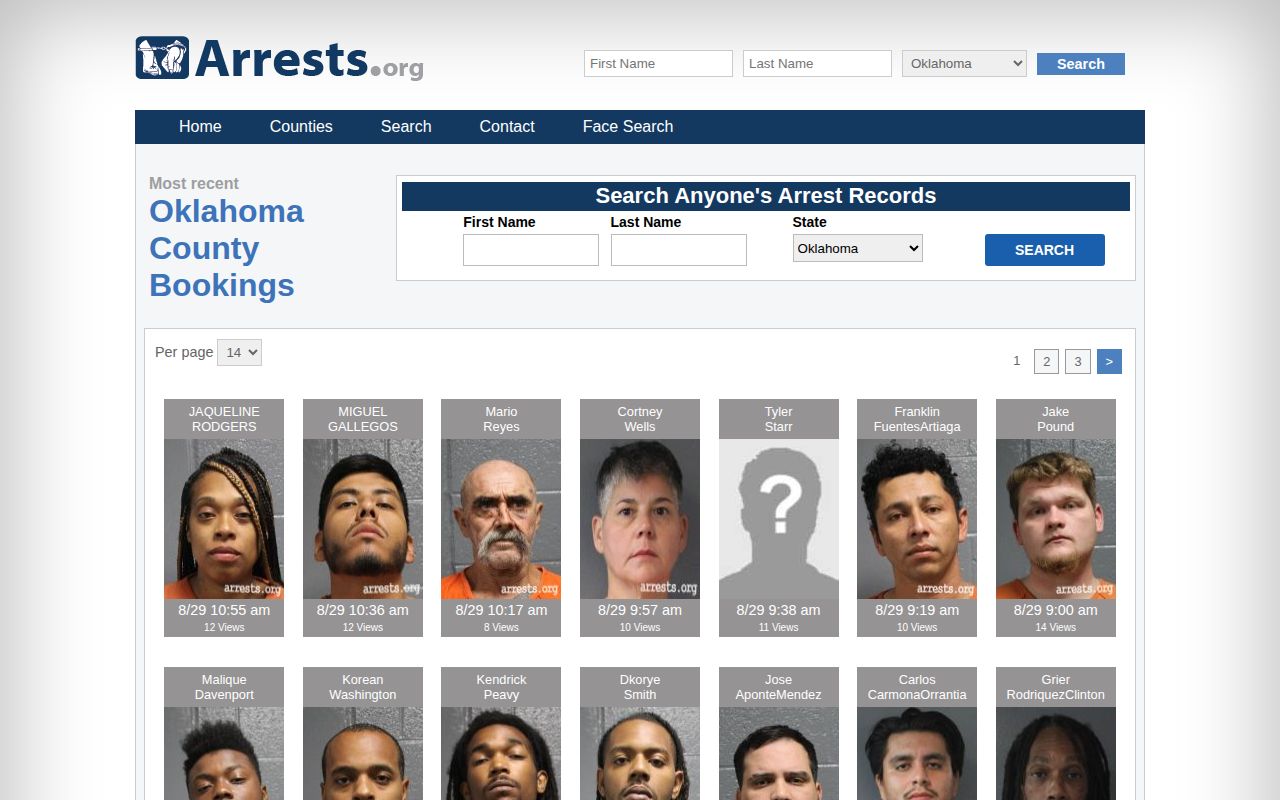
Arrests.org's Oklahoma County page offers recent results with filters for booking date and time, charges, bond, and images. One caution applies. A crawl or cache date can sit far from the actual arrest date. The site publishes no clear county-specific removal process, so nothing here promises a takedown. Correction questions go through the publisher's current contact route or the official record custodian and court.
A screenshot of an outside archive, like the one showing the Arrests.org Oklahoma County section, is just a picture of a third-party page. It is not a booking photo. It says nothing about who is in custody now.
Check any secondary listing against the official record first. Verify the name, charge, image, and date before trusting them. That habit matters most with sites that republish jail data on delay.
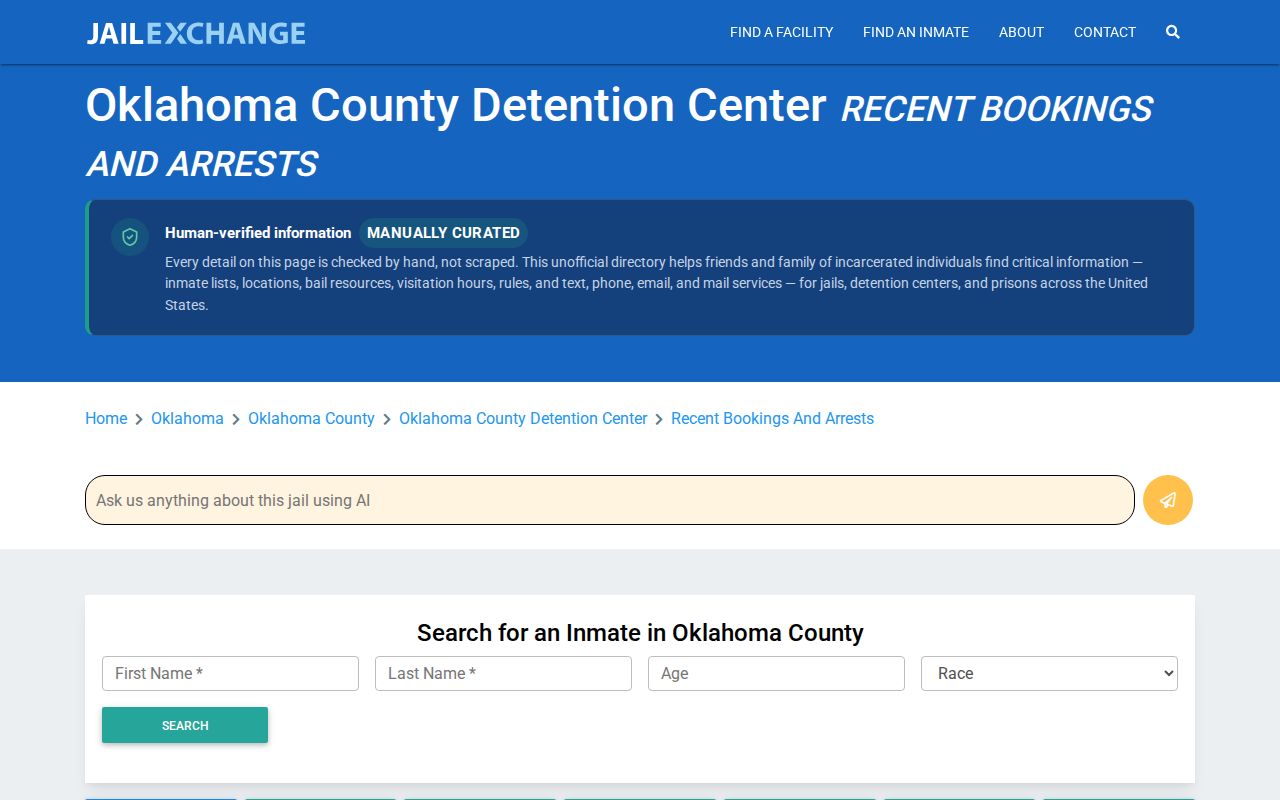
Jail Exchange's Oklahoma County Detention Center page is one example. It works as a supplemental facility guide that can trail the OCDC roster. It does not speak for the jail's current photo policy. Mugshots.zone had no Oklahoma County section. Pages covering other Oklahoma counties don't count here, so none is linked. The captured Jail Exchange Oklahoma County page appears only as a picture of that supplemental interface. Official channels come first.
Start with OCDC's current search and latest report. Then treat any secondary page as context that still needs verification against the official record.
Oklahoma County Case Dispositions
A booking charge and a courtroom outcome are two different things. OCDC's legal-assistance information points people in custody toward arraignment, public-defender access, and local legal help. From there, a court docket tells the rest. A case may move forward, get reduced, be dismissed, or end another way. That is why careful crime-news reading circles back to OSCN. The first report is rarely the last word.
Photos deserve the same skepticism. An image beside a story might come from an agency, a newsroom's booking copy, or an old secondary archive. Track the source and the date. Then lean on the official record to learn where a case stands.